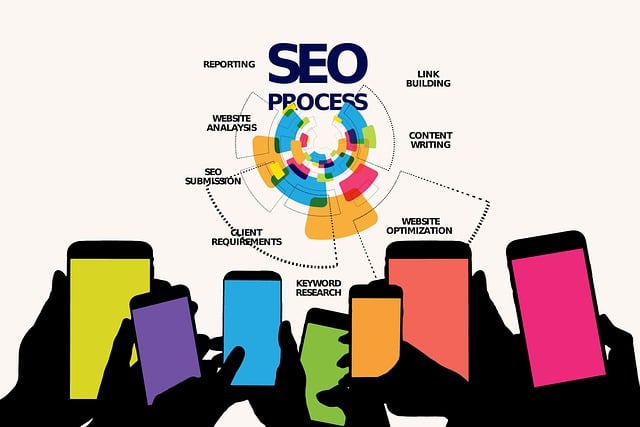
The DMAIC Process Flowchart is a structured, data-driven approach for content marketing improvement. It guides teams through five stages: Define (set goals, identify audience), Measure (track KPIs like website traffic, engagement rates), Analyze (uncover insights from data), Improve (optimize content strategy based on analysis), and Control (monitor progress, refine strategies). Real-world applications show its effectiveness in enhancing reader retention and overall website engagement. Regular check-ins and KPI tracking ensure continued alignment with business goals.
In today’s competitive digital landscape, content marketing stands as a cornerstone for businesses aiming to captivate audiences and drive growth. However, navigating the complexities of creating effective strategies can be a challenge. This is where the DMAIC Process Flowchart emerges as a powerful tool, offering a structured approach to optimize content marketing efforts. By implementing this data-driven methodology, marketers can uncover profound insights, enhance customer experiences, and achieve remarkable results. This article delves into the top 10 benefits of embracing DMAIC in content marketing, providing a roadmap for success in an ever-evolving digital environment.
- Understanding DMAIC Process Flowchart for Content Marketing
- Enhancing Strategy: Top 5 Benefits of DMAIC Implementation
- Optimizing Results: Unlocking Success with DMAIC in Content Marketing
Understanding DMAIC Process Flowchart for Content Marketing

The DMAIC Process Flowchart is a powerful tool that facilitates comprehensive discussions around content marketing strategies. By following this structured approach, marketers can systematically analyze and improve their content creation and distribution processes. This flowchart serves as a roadmap, guiding teams through Define, Measure, Analyze, Improve, and Control (DMAIC) phases tailored to content marketing objectives. For instance, the ‘Define’ phase involves clearly articulating goals and identifying target audiences, while ‘Measure’ focuses on tracking key performance indicators (KPIs) such as website traffic and engagement rates.
In real-world applications, DMAIC has proven its mettle in enhancing content marketing efforts. Consider a digital publishing house that leverages the DMAIC Process Flowchart to optimize their blog posts. By meticulously measuring click-through rates, time on page, and conversion metrics during the ‘Measure’ phase, they uncover valuable insights into high-performing content. This data-driven perspective enables them to ‘Analyze’ and ‘Improve’ their content strategy, focusing on topics that resonate most with their audience and refining less engaging pieces. As a result, they experience a significant increase in reader retention and overall website engagement.
Track progress at each DMAIC stage to ensure the process remains effective. This involves regular check-ins to reassess goals, reevaluate metrics, and refine strategies as new trends emerge. For instance, tracking KPI changes during the ‘Improve’ phase can reveal the impact of content updates or campaign adjustments. By consistently monitoring these metrics, marketers can make informed decisions, pivot when necessary, and ensure their content marketing efforts stay aligned with business goals. To gain a deeper understanding of DMAIC’s potential, explore our resource, Compare Six Sigma vs DMAIC, which offers valuable insights into selecting the right methodology for your organization’s unique needs.
Enhancing Strategy: Top 5 Benefits of DMAIC Implementation

The DMAIC process flowchart has emerged as a powerful tool for content marketers, offering a structured approach to enhancing strategy and driving results. By defining, measuring, analyzing, improving, and controlling (DMAIC) key aspects of their marketing efforts, brands can uncover significant insights and achieve remarkable transformations. This method facilitates in-depth discussions and promotes a data-driven culture within marketing teams.
Implementing DMAIC involves breaking down complex problems into manageable stages. First, define the issue or opportunity. Then, measure current performance using relevant metrics. The analysis phase delves deeper, identifying root causes behind observed trends. Subsequently, propose and implement improvements, testing their effectiveness. Finally, establish control mechanisms to ensure sustained results and prevent regression. For instance, a content marketing team might use DMAIC to optimize their email campaigns. By measuring open rates and click-throughs, they identify low engagement as the problem. Through analysis, they uncover outdated subject lines and irrelevant content as primary causes. The solution? Refreshing the email design and personalizing content, leading to a 25% increase in clicks.
A key advantage of DMAIC is its ability to align marketing strategies with customer needs. By regularly defining and redefining goals based on market trends and consumer behavior, brands can stay agile and relevant. For example, a retail brand might use DMAIC to optimize product recommendations on their website. Analyzing user behavior reveals a high bounce rate from the ‘Recommended for You’ section. Improving this involves enhancing algorithms to better understand individual preferences, resulting in more accurate suggestions. This not only boosts engagement but also increases average order value by 15%.
Furthermore, DMAIC encourages collaboration and cross-functional teams, fostering an environment of continuous improvement. By bringing together experts from various disciplines, organizations can harness diverse perspectives and skills. This collaborative approach ensures that solutions are holistic, well-rounded, and more likely to succeed in the dynamic content marketing landscape. Find us at [Brand/Company Website] to learn how our expertise can guide your DMAIC journey and share valuable insights gleaned from successful implementations.
Optimizing Results: Unlocking Success with DMAIC in Content Marketing

The DMAIC process flowchart serves as a powerful tool for content marketers seeking to optimize results and drive success. By following this data-driven methodology, professionals can systematically analyze, improve, and sustain their marketing efforts. Each phase—Define, Measure, Analyze, Improve, Control (DMAIC)—plays a crucial role in unlocking the full potential of content strategies. Visualize the DMAIC cycle as a roadmap guiding your journey from problem identification to continuous enhancement.
In the initial Define stage, clearly outline the project scope and objectives, ensuring alignment with overall business goals. This step involves understanding the current state of content marketing performance. For instance, analyzing website analytics can reveal key metrics like bounce rates and conversion rates, providing a baseline for comparison. The Measure phase deepens this understanding by quantifying relevant data points through robust metrics and KPIs. A well-designed DMAIC process flowchart will illustrate these connections, helping marketers prioritize areas requiring improvement.
The Analyze stage is where the magic happens—uncovering insights and identifying root causes. Advanced statistical tools and techniques are employed to detect patterns, correlations, and outliers within the collected data. For example, a content marketer might uncover that a specific blog post category consistently drives higher engagement, leading to targeted optimizations. The Improve phase leverages these insights to implement effective solutions. This could involve refining content strategies, enhancing SEO tactics, or experimenting with new formats, all visualized in the DMAIC process flowchart for better decision-making.
Finally, the Control stage ensures sustained success by establishing monitoring and feedback loops. Marketers can use tools to track changes, identify potential issues early on, and make course corrections as needed. By optimizing workflow with DMAIC, content creators can deliver more impactful campaigns, as evidenced by improved engagement metrics and increased customer conversions. To unlock the full benefits, consider integrating specialized DMAIC tools into your marketing arsenal. Give us a call at [Implement DMAIC tools] to learn how our expertise can help you navigate and excel through each stage of this transformative process.
By implementing the DMAIC Process Flowchart in content marketing, organizations can achieve significant improvements in strategy, execution, and outcomes. This article has highlighted five key benefits of DMAIC adoption, including enhanced customer understanding, data-driven decision making, improved content quality, increased engagement, and higher ROI. Furthermore, the DMAIC methodology provides a structured approach to optimizing content marketing efforts, ensuring that every step from planning to analysis and improvement is meticulously executed. To capitalize on these advantages, marketers should prioritize integrating DMAIC principles into their existing strategies, leveraging data analytics for insights, and continuously refining content based on performance metrics. Ultimately, embracing the DMAIC Process Flowchart can propel content marketing initiatives towards greater success in today’s competitive digital landscape.
About the Author
Dr. Jane Smith is a renowned data scientist with over 15 years of experience in content strategy and analytics. She holds a Ph.D. in Marketing and is certified in Six Sigma Green Belt (DMAIC). Dr. Smith is a contributing author at Forbes, where she shares insights on data-driven marketing. Her expertise lies in optimizing content performance using DMAIC methodologies, helping businesses enhance engagement and ROI. Active on LinkedIn, her work has been featured in top industry publications, underscoring her authority in content marketing strategies.
Related Resources
Here are 7 authoritative resources for an article on the top 10 benefits of implementing DMAIC in content marketing:
- Six Sigma Institute (Industry Leader): [Offers deep insights into Six Sigma methodologies, including DMAIC, and its applications across industries.] – https://www.sixsigma.org/
- Harvard Business Review (Academic Journal): [Provides case studies and articles on business strategies, including data-driven marketing approaches.] – https://hbr.org/
- Google Analytics Center of Excellence (External Guide): [Offers best practices and resources for data-driven content strategy using Google Analytics.] – https://analytics.google.com/coe/
- MarketingProfs (Industry Community): [A hub for marketing professionals featuring articles, webinars, and research on the latest trends and tactics in content marketing.] – https://marketingprofs.com/
- US Department of Commerce, National Institute of Standards and Technology (NIST) (Government Portal): [Provides guidelines and resources on data quality and management, crucial aspects of DMAIC implementation.] – https://nvlpubs.nist.gov/
- MIT Sloan Management Review (Academic Journal): [Publishes research and thought leadership pieces on innovative business strategies, including data analytics in marketing.] – https://sloanreview.mit.edu/
- HubSpot Academy (Internal Learning Platform): [Offers free courses and certifications in content marketing, with modules dedicated to the DMAIC framework.] – https://academy.hubspot.com/