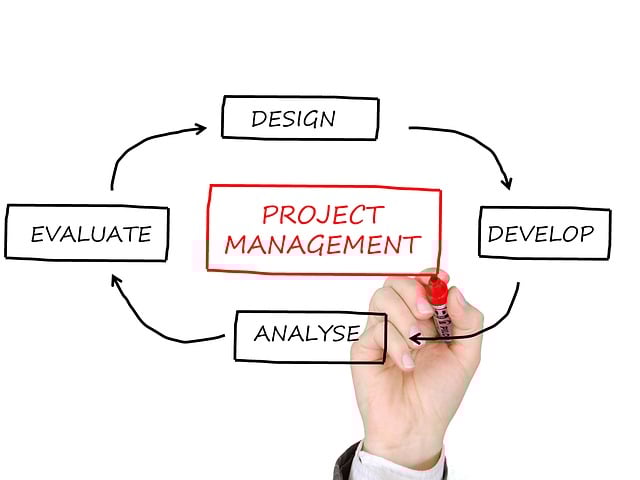
The DMAIC Process Flowchart is a data-driven tool for Six Sigma implementations, guiding teams through five stages (Define, Measure, Analyze, Improve, Control) to enhance process efficiency and quality. It visualizes problem-solving, identifies bottlenecks, and ensures sustained improvements through regular updates. Effective implementation requires cross-functional teams, stakeholder buy-in, and standardized templates. This method is valuable for manufacturing and service industries, optimizing workflows, reducing errors, and improving customer satisfaction. Regular reviews and continuous improvement are crucial for long-term success.
In the realm of continuous improvement, the DMAIC (Define, Measure, Analyze, Improve, Control) process is a cornerstone for organizations seeking efficiency gains. One of the most potent tools within this framework is the DMAIC Process Flowchart, enabling teams to visually map out complex systems and identify areas for enhancement. However, navigating this process can be daunting without strategic time-saving tips. This article delves into the art of streamlining your DMAIC Process Flowchart, offering expert insights to elevate your project’s efficiency and impact. By implementing these best practices, you’ll harness the power of flowcharting to drive meaningful changes in your organization.
- Understanding DMAIC Process Flowchart Basics
- Identifying Key Processes for Flowcharting
- Efficiently Creating Visual Flowcharts
- Data Analysis Techniques for Time Savings
- Optimizing and Streamlining Workflows
- Continuous Improvement through Regular Updates
Understanding DMAIC Process Flowchart Basics

Understanding DMAIC Process Flowchart Basics is a cornerstone of any successful Six Sigma implementation. The DMAIC process—Define, Measure, Analyze, Improve, Control—is a data-driven methodology designed to fix process inefficiencies and enhance quality. A well-constructed DMAIC Process Flowchart acts as a roadmap, guiding teams through each stage and ensuring every decision is rooted in data.
At its core, the flowchart visually represents the sequence of activities required to solve a specific problem. It begins with defining the issue, followed by measuring key performance indicators (KPIs) to establish a baseline. The analysis phase involves root cause identification using tools like fishbone diagrams and statistical analysis. This is where real-world DMAIC examples come into play, demonstrating how organizations have successfully addressed complex issues through data-backed decisions. Once the root causes are understood, the improve stage leverages various process improvement techniques to implement solutions. Finally, control mechanisms are put in place to sustain improvements and prevent regression.
Implementing DMAIC tools effectively requires a structured approach. Start by gathering cross-functional teams with diverse skill sets, ensuring buy-in from stakeholders at every level. Utilize standardized templates and software to create the flowchart, making it easily understandable for all participants. Regularly review and update the chart as new insights emerge, adapting to evolving business needs. For instance, a manufacturing company might use a DMAIC Process Flowchart to optimize production lines, reducing waste and increasing efficiency by 20% in just three months.
Visit us at Improve process using DMAIC to explore more about these powerful tools and techniques. By embracing the DMAIC methodology and leveraging its visual representation through flowcharts, organizations can achieve significant improvements in operational efficiency and quality, setting a new standard for excellence in their industry.
Identifying Key Processes for Flowcharting

Identifying key processes for DMAIC process flowcharting is a critical step in optimizing any business or service industry. As a powerful quality management tool, DMAIC (Define, Measure, Analyze, Improve, Control) offers a structured approach to problem-solving and process enhancement. To create an effective DMAIC process flowchart, start by examining your operations holistically and pinpointing the core processes that significantly impact customer satisfaction and overall business performance. These are the areas where inefficiencies may lurk, leading to waste, delays, or poor quality outcomes.
Facilitate engaging DMAIC discussions within your team to gather diverse perspectives. Encourage open dialogue about current workflows, pain points, and potential improvements. Analyze data collected from various sources, such as customer feedback, operational metrics, and financial reports, to validate hypotheses and make informed decisions. This data-driven approach ensures that the identified processes truly represent areas for significant improvement. Once key processes are pinpointed, prioritize them based on their impact on customers, resources involved, and potential return on investment.
Focusing on these high-impact processes allows your team to maximize the benefits of DMAIC. For instance, a service industry like healthcare could map patient intake procedures, treatment protocols, or discharge planning as key areas for flowcharting and improvement. By visualizing these processes in a DMAIC flowchart, you expose bottlenecks, redundant steps, and areas for automation, ultimately streamlining operations and enhancing patient care. Remember that the DMAIC process flowchart is a living document—visit us at [your website] anytime to share findings, collaborate, and access resources that support continuous improvement initiatives.
Efficiently Creating Visual Flowcharts

Creating visual DMAIC process flowcharts is a powerful way to share findings, facilitate discussions, and improve processes across service industries. A well-crafted flowchart can streamline complex projects, ensuring every team member understands their role and the overall process. Begin by defining the problem and gathering data using tools like fishbone diagrams or 5 Whys. Once identified, map out the current state of your process, pinpointing key steps, decision points, and potential bottlenecks.
Using a standardized flowchart symbol set, such as those defined by IEEE or ISO standards, create a clear and concise visual representation. Each shape and connector should have a specific purpose: processes, input/output, decisions, and data flow. For instance, rectangular boxes depict process steps while diamonds indicate decision points. Linking these elements with arrows shows the sequence of operations and data flow. This visual approach not only aids in understanding but also allows for quick identification of areas requiring improvement.
During the DMAIC (Define, Measure, Analyze, Improve, Control) cycle, regular review meetings can be facilitated by presenting these flowcharts. They serve as a central reference point, enabling stakeholders to ask questions, challenge assumptions, and share insights. For instance, during the Analyze phase, flowcharts can help identify root causes of problems by illustrating how different variables interact within the process. As you progress through DMAIC 1-3 times, refining your approach each cycle, these visual tools evolve alongside your understanding, ultimately leading to a more efficient, effective process.
To maximize efficiency, consider using digital flowchart software that offers collaboration features. These platforms allow real-time updates and comments, ensuring all team members are aligned. Regularly update your DMAIC process flowcharts as processes change, ensuring they remain accurate and relevant. By embracing this practice, you’ll not only enhance communication but also empower your team to consistently apply DMAIC principles, ultimately driving continuous improvement in service industries. Find us at [your brand/NAP] for expert guidance tailored to your needs.
Data Analysis Techniques for Time Savings

In the world of manufacturing and process improvement, the DMAIC (Define, Measure, Analyze, Improve, Control) approach is a powerful tool to enhance efficiency and reduce waste. When it comes to optimizing the DMAIC process flowchart, data analysis techniques play a pivotal role in time savings. By employing advanced analytical methods during the ‘Analyze’ phase, teams can uncover insights that drive meaningful changes across all DMAIC phases.
One of the most effective strategies is to leverage statistical tools and predictive analytics. These techniques enable manufacturers to identify root causes of issues by analyzing historical data and patterns. For instance, applying regression analysis to study the correlation between process variables and defect rates can reveal critical factors influencing product quality. This proactive approach allows for targeted improvements, ensuring that efforts are focused on the most impactful areas. Moreover, predictive models can forecast potential bottlenecks or quality issues before they occur, enabling preventive measures.
The DMAIC methodology is most effective when the team is well-trained and familiar with its principles. Regular training sessions, conducted 1-3 times during a project, ensure that everyone involved understands their role and the overall process. This knowledge empowers employees to make informed decisions, identify potential issues early on, and contribute to efficient flowchart design. Additionally, cross-functional teams can benefit from collaborative analysis, where diverse skill sets are leveraged to interpret data from various perspectives.
Remember that successful application of DMAIC in manufacturing requires a structured yet flexible approach. As you navigate the process, be prepared to adapt and refine your strategies based on real-world insights. Find us at Diagram DMAIC phases for a comprehensive guide to visualizing and optimizing these critical steps. By combining robust data analysis with thorough training, organizations can streamline their processes, reduce time cycles, and ultimately enhance overall operational efficiency.
Optimizing and Streamlining Workflows
Optimizing workflows is a key aspect of enhancing efficiency within any process, especially when employing the DMAIC (Define, Measure, Analyze, Improve, Control) methodology for process flowchart creation. By meticulously mapping out and understanding current processes, organizations can identify bottlenecks, redundant steps, and control variations that hinder productivity. For instance, a service industry might discover that lengthy approval processes are causing significant delays in customer service responses, impacting overall customer satisfaction. In such cases, leveraging the DMAIC Process Flowchart as a visual tool enables teams to streamline these workflows, ensuring faster turnaround times and enhanced quality.
One of the most effective strategies for control variations with DMAIC is establishing clear standards and protocols. Documenting each step of the process flowchart ensures consistency and allows for easy identification of deviations. For instance, a healthcare organization can use DMAIC to map out their patient admission procedure, pinpointing areas where inconsistencies lead to longer waiting times in emergency departments. By documenting and standardizing these processes, they can control variations, reduce errors, and improve overall operational efficiency. Additionally, regular reviews of the documented results facilitate continuous improvement, ensuring that workflows remain optimized as business needs evolve.
The versatility of DMAIC extends beyond manufacturing sectors; it is an invaluable tool for service industries looking to enhance their operations. For example, a call center might employ DMAIC to analyze customer interaction times and identify areas where agents spend excessive time on non-value-added activities. By using the process flowchart to visualize these tasks, they can redesign workflows, implement automated systems, or retrain staff to minimize such inefficiencies. Documenting the findings and controlling variations throughout these processes leads to improved service delivery and increased customer satisfaction.
To maximize the benefits of DMAIC for workflow optimization, organizations should encourage ongoing feedback and continuous improvement. Visit us at Measure success of DMAIC to gain actionable insights from data-driven analysis, ensuring that your process flowcharts remain relevant and effective in driving operational excellence.
Continuous Improvement through Regular Updates

The DMAIC process flowchart is a powerful tool for driving continuous improvement within organizations, but its effectiveness can be limited if not regularly updated and iterated upon. One of the key aspects that sets apart truly successful implementation is the incorporation of continuous improvement methodologies into the core of DMAIC (Define, Measure, Analyze, Improve, Control) practices. This involves a strategic approach to refining processes over time, ensuring they remain aligned with evolving business needs and market demands. By embracing this mindset, organizations can avoid the pitfalls of static process mapping and unlock sustained efficiency gains.
Regular updates to DMAIC flowcharts should not be seen as mere administrative tasks but rather as opportunities for deep reflection and strategic planning. It requires the trained team to analyze not only the current state but also the direction in which the organization is heading. For instance, a manufacturing company utilizing DMAIC might regularly review its flowchart to identify bottlenecks that have emerged due to new product lines or changing customer preferences. This proactive mindset fosters an environment where continuous learning and adaptation are valued, enabling organizations to stay agile and competitive.
To effectively implement this strategy, it’s crucial to invest in training teams on DMAIC methods and ensuring a comprehensive understanding of the methodology. This enables practitioners to identify potential limitations within their processes and make informed decisions for improvement. For example, a team might discover that a specific control mechanism is no longer effective due to changes in raw material suppliers, necessitating an update to the flowchart and related controls. By integrating continuous improvement into the DMAIC process, organizations can measure success not only at each stage but also over time, ensuring long-term operational excellence.
Visit us at [Measure success of DMAIC](https://www.example.com/dmaic-success) to explore practical case studies and gain actionable insights on optimizing your continuous improvement journey through regular DMAIC flowchart updates.
By mastering the art of DMAIC Process Flowchart creation, organizations can significantly enhance efficiency and productivity. This article has guided readers through a comprehensive journey, from grasping the fundamentals to optimizing workflows. Key takeaways include prioritizing process identification, leveraging data analysis for time-saving insights, and embracing continuous improvement through regular updates. Armed with these strategies, businesses can navigate their processes with greater clarity and agility, ultimately achieving remarkable results in today’s fast-paced environment.