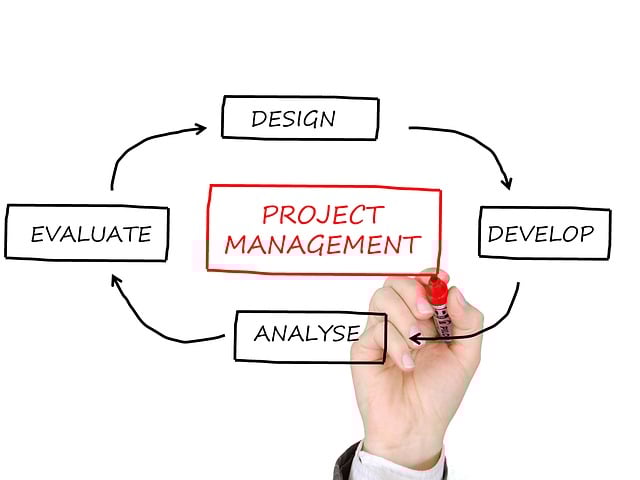
In today’s competitive business landscape, enhancing sales performance is a constant pursuit for organizations aiming to thrive. Here, we delve into the powerful methodology known as DMAIC—a data-driven approach that revolutionizes sales strategies.
The current challenges in sales, marked by dynamic markets and evolving customer preferences, demand a structured solution. DMAIC, an acronym for Define, Measure, Analyze, Improve, Control, offers a systematic framework to navigate these complexities. By following this process flowchart, businesses can identify key performance indicators, root out inefficiencies, and implement data-backed improvements.
This article will guide you through each phase of DMAIC, showcasing how it transforms sales operations and boosts overall organizational success.
- Understanding DMAIC: A Sales Enhancement Framework
- The Five Phases: Mapping Out DMAIC Process Flowchart
- Boosting Sales with Data-Driven DMAIC Strategies
Understanding DMAIC: A Sales Enhancement Framework
The DMAIC process flowchart is a robust framework for driving continuous improvement, including boosting sales within service industries. DMAIC stands for Define, Measure, Analyze, Improve, Control—a structured approach that breaks down complex issues into manageable steps. By meticulously following this process, sales teams can identify inefficiencies, pinpoint root causes of challenges, and implement targeted solutions to enhance performance.
For instance, a customer service team struggling with high abandonment rates during initial interactions can utilize DMAIC. In the Define phase, they clearly outline the problem: improved customer retention during initial support contacts. The Measure step involves tracking key metrics like first-contact resolution rate and average handling time. Through data analysis in the Analyze stage, they uncover that lengthy call durations are linked to higher abandonment rates. This insight guides the Improve phase, where strategies such as implementing an AI chatbot for simple queries or refining agent training can be deployed. The Control step ensures these improvements are sustained through automated alerts monitoring key metrics and triggering corrective actions when thresholds are breached.
While DMAIC offers significant advantages, it’s not a panacea. Its success hinges on accurate data collection and analysis, buy-in from all levels of the organization, and continuous refinement. Moreover, in dynamic service environments, where customer needs evolve rapidly, maintaining a strict adherence to the traditional DMAIC process flowchart might prove challenging. As such, adaptable approaches that blend DMAIC principles with agile methodologies can yield more robust results.
To document and track these DMAIC results effectively, consider giving us a call at [Your Company/Brand]. Our experts can guide you in translating data insights into actionable strategies, ensuring your sales enhancements are both measurable and sustainable.